

Most Wanted: Music Research will take place on November 4 and 5, 2026 at nhow hotel Berlin and was established over the last years as a new conference track for encounters between artists, practitioners and researchers. It features both longstanding research-industry collaborations between the Berlin Music Commission and the GMM (Gesellschaft für Musikwirtschafts- und Musikkulturforschung), adding an international speaker line-up curated from a call for participation targeted towards the areas of music business, music culture, music tech, and music education.
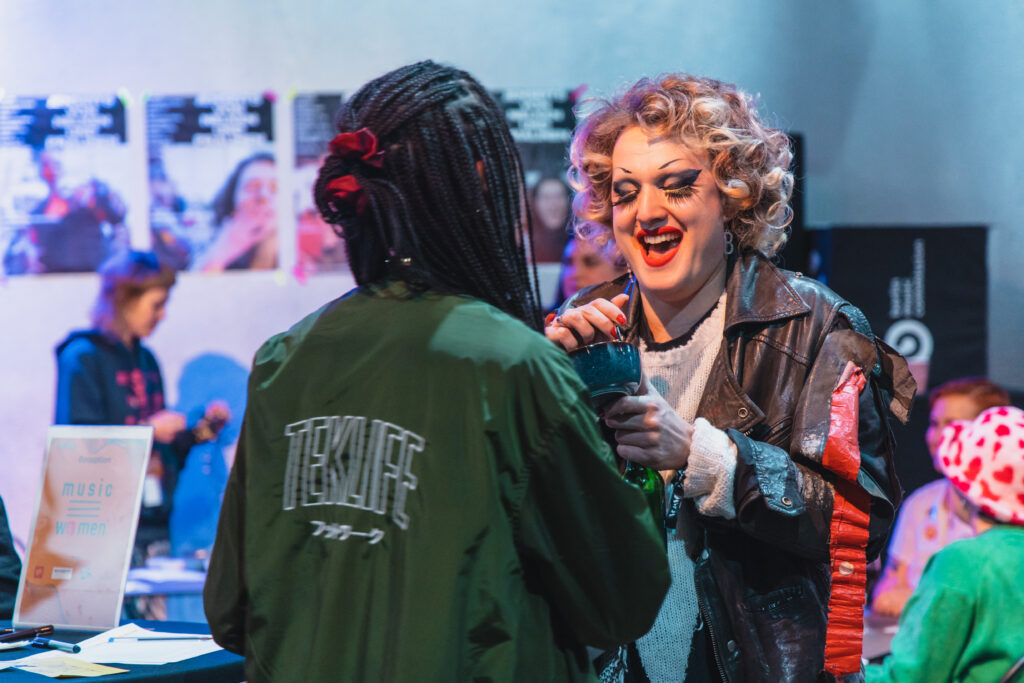
If you want to be part of MW:M Research and think you’ve got a research project that people need to know about and that you want to work on with dedicated professionals, apply here in our call for research proposals:


Research Sessions
Format
Language
Location
Topic Stream
Vertical
Format
Language
Location
Topic Stream
Vertical
Conference Track
Inclusive Academic Tutorials for Neurodivergent International Music Students
The study adopts a qualitative which was based upon visual representations of how students experience their learning experiences. The findings showed that tutorials extend beyond academia, functioning as relational learning spaces that foster confidence, belonging and psychological safety. Their effectiveness and inclusivity depend on factors including institutional processes, accessibility, time, learning environments and material resources.
The study conceptualises tutorials as sociomaterial practices through which inclusion is negotiated rather than assumed. It also demonstrates the value of Inquiry Graphics as an innovative multimodal method for exploring neurodivergent student experiences. The findings offer practical implications for designing more inclusive tutorial systems.
-
Luisa Lerma
Rewiring the Studio for Flow: Haptic Feedback and Accessible Music Production
This session will reflect on research exploring haptic solutions, through the lens of flow. Since haptic feedback can be built into familiar gear from the design stage, it deserves everyone’s attention and this session will discuss how industry can respond and adapt.
-
Joy Bausch -
James Hurley
Beyond the Open Scene: Mobility, Belonging and Cosmopolitan Music-Making in Berlin
The material also raises questions of classed mobility, linguistic capital and access to urban musical infrastructures, as well as forms of gatekeeping that operate within ostensibly open music scenes, and the role of local cultural policy in producing “cosmopolitan” musical spaces.
Situating these questions within debates on translocality, cosmopolitanism and urban ethnomusicology, the project treats Berlin not as an exceptional case, but as a starting point for comparative inquiry into the politics of cosmopolitan music-making in contemporary cities.
-
Sandra Bogdanovic
Rewiring Small Music Ecosystems: Evidence from the Georgian Music Industry
Conducting a quantitative survey of 78 active Georgian musicians alongside a review of international literature, the research examines three main areas: business models, digital marketing practices and structural support mechanisms.
The digital transformation has lowered barriers to entry but has not addressed deeper ecosystem challenges and this talk will use Georgia as a representation of many small and emerging music markets.
In line with the theme, the presentation proposes that improving music ecosystems requires reconnecting artists, education, industry professionals, public institutions and digital platforms rather than relying only on technological innovation or musical democratisation.
-
Levani Abashidze
Instrument of State: Reinstrumenting Recorded Sound and Recomposing Listening
-
Frank Pecquet
Collaborate, Don't Automate: Rewiring AI Music from One-Shot Tools to Live Jamming Partners
History, however, shows us that artists adapt to new technologies by making them their own. With this context this talk proposes rewiring generative AI from an instrument of automation into a partner in collaboration, the kind you play with rather than prompt. The session will outline the path from offline, one-shot generation toward online systems that can jam with the artist.
Addressing the Rewire! theme, the talk will explain how the connection most worth patching is between artists and machines that play together. It is an open invite to musicians, technologists and researchers to discuss what such an agent must do to earn a place on stage.
-
Kevin Bretz
Collective Listening through Imagination
-
Sonia Killmann
From Claims to Contact: A Framework for Social Engagement in Art
Funders and platforms increasingly ask artists to demonstrate relevance to social, political or technological change, requiring them to name precisely how their work relates to a social force, not just that it does.
The framework presented here will distinguish three types of relation between an artwork and a social force. These frameworks can make work visible, experienceable, or capable of creating new conditions.
Participants will gain the framework through a short paper and a presentation drawing on examples from the German funding landscape, existing artworks and the speaker’s own work.
This will be a hands-on session follows, in which participants apply the given framework to their own projects, applications, or artistic work.
Mapping Gender Equality Initiatives across the European Music Industry
This paper details the challenges of constructing a pan-European database and rigorously examines the significant ethical dilemmas encountered, from gatekeeping to the risk of weaponisation in hostile political environments. Ultimately, the paper contends that projects like GENiE, are essential but must continually navigate the paradox of replicating the very structural burdens they seek to dismantle.
-
Grace Goodwin
Are We Designing for the Wrong Kind of Production? Rethinking Tools for an Evolving Practice
This presentation argues that contemporary production has evolved beyond making as its sole emphasis. Instead, it is increasingly shaped by shifting roles and expanding technologies and as such, production increasingly involves mediation so that work can carry forward.
Drawing on practice-based doctoral research, this presentation proposes a shift toward designing tools for navigating production as an evolving practice. It offers work-in-progress and speculative directions for future tools that better account for what production now entails. The central proposition is simple: we are not lacking tools for making. We are lacking tools for navigating what making has become.
-
Karun Dha
Involving the Audience in Music and Sound Events
The talk will include attendees of music events (concerts, installations) in an active manner, from social musicking to co-composing. Together this ‘modern opera’ will be a multidisciplinary live experience where technology seamlessly integrates music, drama, dance, lighting and audience interaction. Lessons learned from deployments across multiple contexts will be shared, alongside a discussion of the design challenges, open questions, and future directions for audience participation technology in live music.
-
JP Carrascal
MW:M Research Presentations
Continue the conversations, meet fellow creators and thinkers, and celebrate a day of shared curiosity, collaboration, and creative exploration.
-
Levani Abashidze -
Joy Bausch -
Sandra Bogdanovic -
Kevin Bretz -
JP Carrascal -
Grace Goodwin -
James Hurley -
Karun Dha -
Sonia Killmann -
Dr. Steffen Lepa